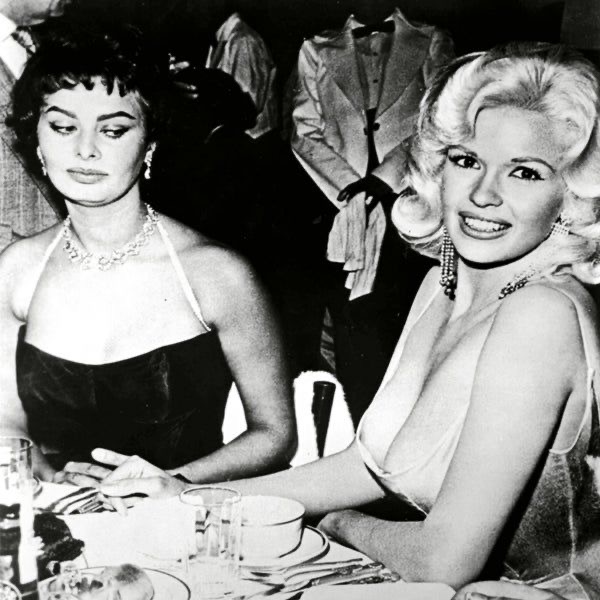
The vacation you’ve been dreaming about for months is finally here. You’ve slathered on your sunscreen and stretched out under the warm sun. Once you realize you’re practically roasting on your lounger, you turn to your companion: “Let’s go take a dip.” But before you reach the water, you have to cross a major hurdle: the runway.
Whether you’re on a sandy beach or a wooden pier, almost every woman—and plenty of men—you pass on your way to the waves will track you out of the corner of their eye, scanning you from head to toe.
As you walk, you’ll feel those eyes burning into your back. It’s as if those glances are bathroom scales, instantly calculating your BMI. And it doesn't stop there: Does that swimsuit flatter her? Do her accessories match? They might even whisper a quick critique to the person sitting next to them. By the time you reach the shoreline, those piercing looks feel hotter on your skin than the afternoon UV rays.
I don’t know how many of us are emotionally equipped for this ritual, but there has to be a way out of this mutual torture we inflict on one another.
Social Media and the "Beach Body" Pressure Trap
If we’re being honest, the stress of beach season starts weighing on women months before anyone ever lays out a towel. Almost overnight, social media splits women into two strict categories: those who have a "beach body," and those who don't.
Like clockwork, the internet floods with posts shaming the second group while selling them quick fixes—miracle cellulite creams, "lose 10 pounds in 5 days" cleanses, and workout routines promising instant toning. While a few voices argue that you don't need a specific body type to enjoy summer, their message gets drowned out by the roar of the wellness industry.
Even though we watch this exact same movie every single year, we can’t seem to break the cycle. Worse yet, we actively play into it.
When you run into an acquaintance you haven't seen in ages, they don't open with "How are you?" Instead, they launch a rapid-fire interrogation: "Did you lose weight? Did you get work done on your face?" And if you answer "No," they never believe you—because the grass always looks greener on the other side. But if you say "Yes" and share your routine, they immediately rattle off a list of excuses for why they could never pull that off. It becomes an endless game of comparison, where everyone leaves feeling worse about themselves.
This relentless urge to judge harms both the person dishing it out and the person on the receiving end. Yet, while we experience gender inequality in our daily lives down to our bones, we tend to sweep this toxic behavior under the rug to keep a united front. To break the loop, we need to hold up a mirror to ourselves and dismantle the warped beauty standards we’ve internalized.
Is Beauty Just "Erotic Capital"?
Since ancient times, physical beauty has been treated as a golden ticket to acceptance, privilege, and status.
Building on Pierre Bourdieu’s theories of economic, cultural, and social capital, sociologist Catherine Hakim coined the term "erotic capital" to describe beauty. Research consistently backs this up, showing that good looks yield distinct advantages not just in dating, but in the workplace. A landmark 1994 study introduced the concept of the "beauty premium," finding that attractive individuals earn roughly 5% more than their average-looking peers. Given those perks, it’s hardly surprising that people invest so much effort into their appearance.
However, beauty standards are a moving target. What we consider ideal today looks nothing like the ideals of the past. The voluptuous women painted by Impressionist master Renoir would be torn to shreds on modern social media. In fact, rumor has it that certain high-end beach clubs along the Aegean coast turn people away at the door if they don't fit a specific physical mold.
The Manufacture of Inadequacy
So, what is driving today’s hyper-specific aesthetic standards?
According to plastic surgeon Dr. Evrim Uçkunkaya, modern beauty ideals are largely dictated by a massive cosmetics and personal care industry. The market expands by capitalizing on women’s perceived "flaws." The classic example is Gillette’s 1915 advertising campaign, which convinced women that underarm hair was "unfeminine" solely to open up a brand-new razor market.
By the 1940s, the idea that a woman’s skin must be completely smooth was firmly entrenched, and leg hair joined the list of taboos. As women scrambled to meet these newly manufactured benchmarks, corporate profits soared.
Dr. Uçkunkaya points out that social media has dialed this manipulation up to eleven. Ever since Instagram exploded in 2010, beauty content went global, and the rise of influencer culture supercharged the industry’s growth. Today, social media is arguably the single most powerful force shaping how we view ourselves.
More and more women walk into clinics demanding a look they saw on their feed rather than what actually suits their unique features:
"Five years ago, everyone wanted 'French lips.' Today, it’s 'Korean lips.' Women don't stop to ask if it fits their face—they just worry that if they fall behind the trend, they won't be considered attractive."
The Magic Wand and the Avatar Fallacy
These algorithmically driven beauty standards don't just fuel competition among women; they force people into ill-fitting identities, worsening their self-doubt. When women look in the mirror, what are they actually searching for? A better version of themselves, or someone else entirely?
Dr. Uçkunkaya notes a major shift: patients used to bring in photos of celebrities, but now they bring in filtered selfies or digital avatars. Expectations have drifted away from reality:
"People are looking for a magic wand. But most of those images online are heavily filtered. The few that are real require massive amounts of money, time, and effort. We only see the polished 'after' shot—we never see the 'before,' nor do we question the process it took to get there."
To preserve youthful skin, she advocates for a holistic approach: strict sun protection, a clean diet, and a consistent, tailored skincare routine.
"If you aren't doing the basics, don't expect Botox to work miracles."
The Siren Song of Shortcuts
This search for a silver bullet extends far beyond plastic surgery—it dominates the fitness world, too.
Pilates instructor Melis Yengil observes that people who rush to sign up for classes right before summer miss out on the real goal: long-term health:
"Consistency wins every time. Short-term fixes always fail. After age 30, shifting hormones trigger muscle loss. Even if the scale doesn't change, your body looks different because your body-fat ratio shifts. If you aren't strength training, you’re fighting a losing battle.”
When I bring up the recent trend of weight-loss injections as another shortcut, Yengil issues a warning. While these medications cause rapid weight loss, they also lead to significant muscle wastage, and the long-term health consequences of using them purely for aesthetics remain unknown. Her advice? Stick to the natural route.
Modern research on longevity points to regular exercise as a non-negotiable foundation for a healthy mind and body. Unfortunately, there's a pervasive myth that you already need to be in shape just to step into a gym or join a class. Social media reinforces the idea that everyone who works out gets an instantly flawless physique.
In reality, exercise—paired with good nutrition—is a long-term investment in your future self, designed to keep you vibrant and mobile as you age, not just to shed a few pounds for summer. Today, anyone with an internet connection can carve out 20 minutes a day to follow a guided workout at home.
Rewriting the Code
While beauty standards have shifted wildly across generations, the desire to be attractive remains deeply ingrained. In the age of social media, that desire has turned into an obsession.
The fact that skincare and makeup routines are now targeting girls as young as 10 is proof of how out of hand things have gotten. Dr. Uçkunkaya explains that our perception of beauty triggers the brain's reward system, releasing dopamine in a pattern that closely mirrors addiction. The beauty industry plays this chemical loop like a fiddle. But as she points out:
"These are our biological instincts. We can't change how our brains are wired, but we can change how we interpret the code."
Making Peace with the Mirror
How many of the faces and bodies we scroll past online are actual reality, and how many are right for us? If we chase every goal post set by an industry built on our insecurities, we will never make peace with the person in the mirror.
In 2015, photographer Shea Glover conducted a simple social experiment. She set up a camera, told various women, "You are so beautiful," and captured their immediate reactions. The moment they heard the compliment, an inner light flickered on. Their faces softened, their eyes lit up, and the photos turned out stunning. You could see how deeply powerful it was simply to feel appreciated.
Maybe that’s what we need to do more often: defy an industry that profits off our doubt by reminding ourselves—and each other—that we are already enough.
None of us know how many summers we have left with the people we love. We might as well start by soaking up the simple joys: sea salt drying in our hair, warm sun on our skin, and a cool evening breeze.
This summer, let’s trade the side-eye season for a season of making peace with ourselves.