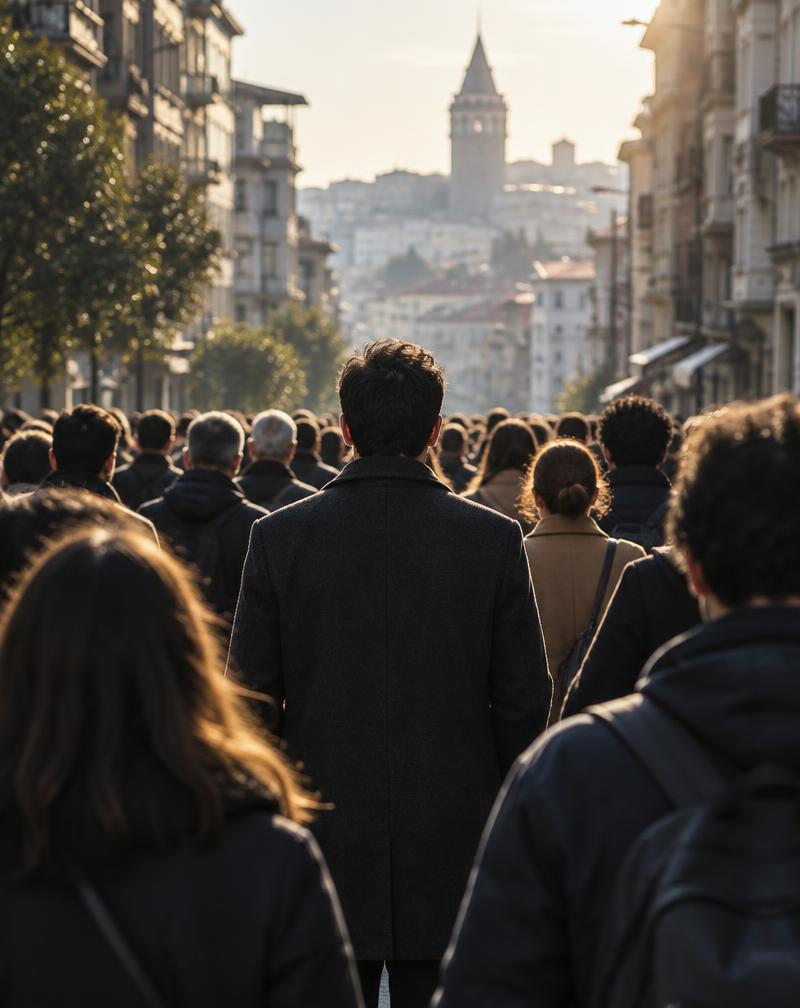
A comprehensive study on heroism sheds light on a striking national mindset: rather than taking the reins of our own stories, we as a society are waiting for a savior to step in from the outside. While 65% of participants demand a hero who is inherently just, 85% believe a leader must step up to drive radical or structural change.
Did you have a hero growing up? Maybe a comic book icon, a star athlete, or a beloved family member—someone who served as your north star, inspired you, or kept you grounded through tough times? Or perhaps you were one of the rare few who chose to become the hero of your own story?
What actually makes someone a hero? Is it supernatural powers, or simply being made of flesh and blood yet putting others first while navigating life with an unshakeable moral compass?
Heroism has been heavy on our minds lately. The recent arrest and fraud allegations surrounding musician Haluk Levent—a man once listed among Turkey’s most trusted public figures, whose relief network AHBAP elevated him to near folk-hero status—forced many to reevaluate what heroism really means.
Against the backdrop of Christopher Nolan’s The Odyssey hitting theaters and reigniting cultural debates on epic mythologies, a new "Perception of Heroism" study by the Data Institute (Veri Enstitüsü) shines a light on why society craves savior figures so deeply.
Examining how individual and collective expectations of heroism translate to the political arena, the study unearths striking insights into Turkey’s core values, anxieties, and vision for the future.
"A Strong Leader Who Will Bend the Rules If Necessary"
After a decade marred by political turbulence, economic crises, and natural disasters, the data shows a society that feels a far greater need for heroes than in years past.
While traits like "justice" and "courage" topped the list of ideal heroic qualities, the overwhelming demand for fairness exposes just how deep public frustration with the status quo runs.
Strikingly, one in two respondents agreed that the country needs "a strong leader willing to break the rules if necessary." This reflects a fragile democratic culture where citizens prefer seeking a powerful savior over taking personal agency to shape their own collective future.
The Heroes of Our Shared Memory
To unpack how social media users perceive heroism and how brands project it, the study draws heavily on analytical psychologist Carl Jung.
Jung posited that humanity shares a universal blueprint of the mind—a "collective unconscious"—that explains why disparate cultures across history share similar symbols and mythological archetypes. Among these, the "Hero" is one of the most potent symbols in our collective psyche.
At its best, the hero archetype urges us to step out of our comfort zones, push past our limits, and take ownership of our fate rather than remaining passive spectators. In analyzing the individual perception of heroism, the Data Institute’s research reveals both our reliance on saviors and our untapped potential for personal agency.
Everyday Heroes: Potential vs. Reality
The study asked respondents whether they viewed themselves as heroes, what traits they associated with the concept, and in which areas of life they needed heroic intervention.
The numbers present a clear picture: roughly four out of ten people do not consider themselves heroes in their own lives or society, while three out of ten do. Interestingly, self-perception as a hero drops sharply with age.
Among young adults aged 18 to 29, 41% consider themselves heroes—suggesting that simply stepping into adulthood under tough conditions feels like an act of heroism in itself.
Furthermore, while one in three respondents claimed they had performed a heroic act, nearly half (49%) admitted they hadn't yet, but desperately wished to. This highlights a latent, unexpressed desire for agency waiting for an outlet.
What Superpower Would You Choose?
When asked which superpower they would choose if given the chance, "the power to heal illnesses" emerged as the top choice across almost all age groups.
However, the survey surfaced a poignant detail: overall, 13% chose "unlimited financial resources" as their dream superpower. That number surged to 21% among 30-to-49-year-olds—a stark reminder of how everyday economic pressure crushes even our wild imaginations.
When asked what they needed most to become the hero of their own lives, young adults cited courage (24%), whereas respondents over 50 equated heroism with wisdom (21%).
What Society Craves: Justice, Security, and Livelihoods
When looking at where people want help from a hero, the social and political climate comes into sharp focus.
According to the study, 30% of the public wants a hero who can provide "hope and reassurance."
Ages 18–29 (34%): Want a hero who gives them the drive and motivation to fight on.
Ages 30–49 (25%): Are actively searching for a figure to ease their daily anxieties.
This data underlines a widespread hunger for guidance and certainty in an unpredictable world.
The Non-Negotiable Trait: Fairness
When asked what the nation expects most from its heroes, justice takes center stage. 65% of participants defined "being just" as a hero’s most crucial trait, while 56% stated that a hero’s primary duty is to restore justice and equality.
Across the political spectrum, the demand for justice was the overwhelming priority for voters of almost every major party:
DEM Party: 78%
MHP: 65%
CHP: 60%
AK Party: 54%
Undecided Voters: 50%
Zafer Party: 36%
In addition, one in four women stated that society expects security and peace of mind from a hero, while one in four university graduates demanded solutions to the cost-of-living crisis.
"O Savior, Come Fix Everything"
While individual priorities differ, the overall longing for a hero is universal.
Seven out of ten respondents feel a greater need for heroes today than in the past—a sentiment that rises to 70% among youth and 74% among women. Alarmingly, 70% also feel that young people currently lack positive role models to look up to.
When this longing translates to politics, it paints a complicated picture. The appetite for systemic change is overwhelming: 85% believe a leader must drive change, with half favoring gradual reform and 35% calling for radical overhaul. Key priorities for reform include education (51%), the economy (50%), and judicial independence (41%).
However, the study highlights a striking paradox. Among the 87% who "strongly agree" that a new hero could unite the country, the vast majority also agree that solving the nation's problems requires a strong leader who is willing to break the rules.
This contradiction reveals a public that prioritizes security over liberty, relying on a traditional, paternalistic view of the state expected to protect and provide for its citizens like a guardian parent.
What Kind of Leader Are We Looking For?
Using Carl Jung's psychological archetypes, the study mapped out the leadership profiles people subconsciously crave, revealing a fragmented set of desires:
The Protector / Shelter (37%): A compassionate, nurturing figure who puts societal well-being above all else.
The Wise Guide (19%): A mentor defined by intellect, knowledge, and steady direction.
The Ruler / Authority (16%): A strong figure who establishes order, takes charge, and enforces stability.
The Innovator (9%): A visionary who breaks boundaries to drive progress.
The Classic Hero (9%): A warrior figure who takes on all hardships to achieve results.
This split mirrors academic findings showing that during periods of heightened political and economic uncertainty, populations naturally drift toward strongmen offering order and control.
Waiting for a Savior
Rather than looking for a single type of leader, society wants a single actor to embody multiple, conflicting roles at once.
Bekir Ağırdır, founder of the Data Institute and lead researcher on the project, notes that public expectations of leadership are intense yet splintered. "We are a society searching for its hero, and the longer we fail to find one, the more desperate our need becomes," Ağırdır observes.
This brings us back to Jung's original lesson on the hero archetype.
The true purpose of hero narratives isn't to breed passive reliance on a messiah figure; it is to grant individuals the courage to confront their own flaws and take charge of their own lives. Yet the data shows a society waiting on the sidelines for a savior to do the heavy lifting.
Just as individuals mature by taking accountability, societies grow up only when they stop waiting for a hero and start taking responsibility for their own collective destiny. Recognizing this dependency is the very first step toward breaking the cycle.